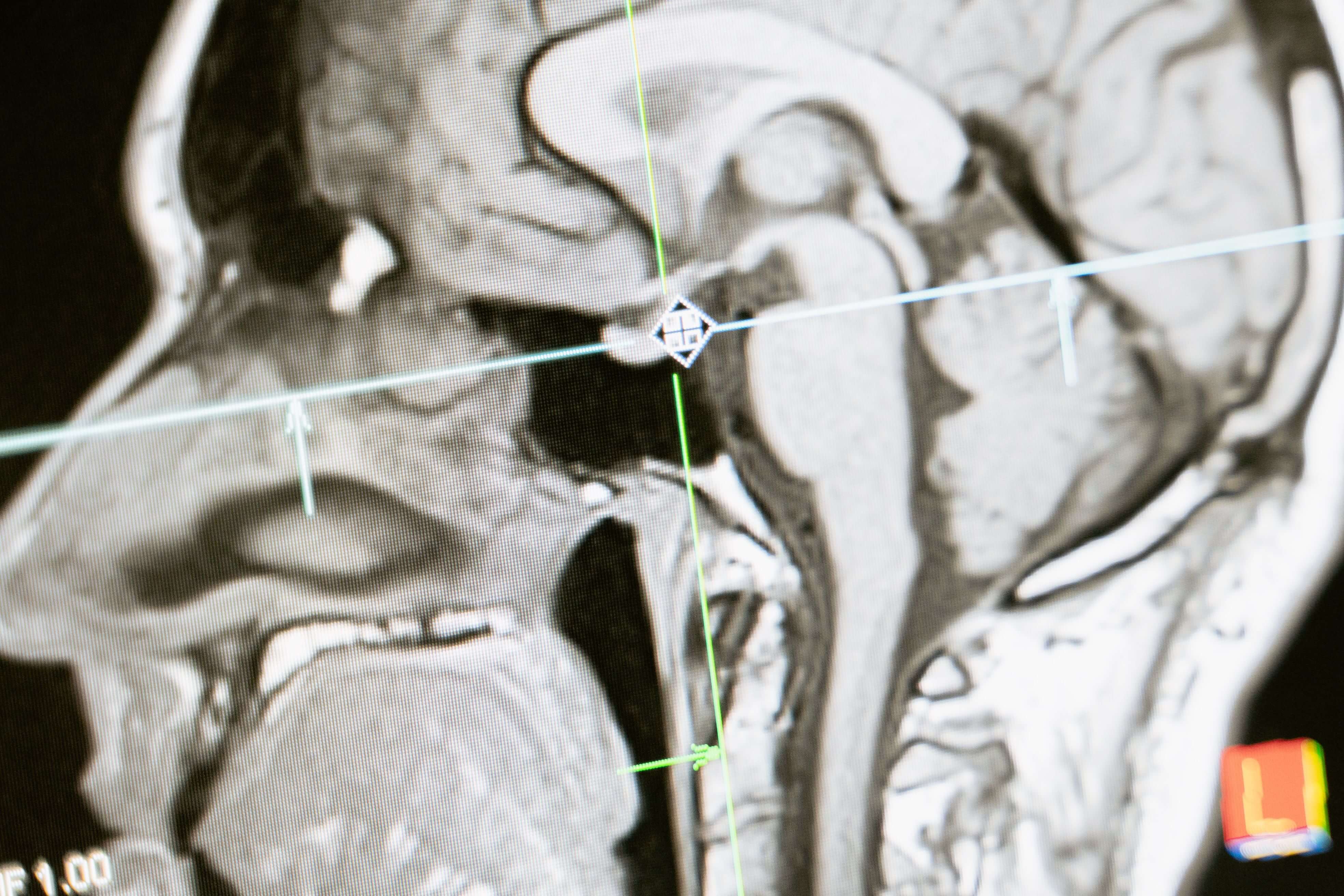
The Brain and the Control of Hunger
Eating is not a response determined exclusively by the body's energy needs. The choice and amount of food we consume are also influenced by signals from the body, emotions, the environment, and the brain's reward system.
The brain continuously integrates this information to determine when to start and when to stop eating. Several brain regions, including the prefrontal cortex and the insula, are involved in the control of eating behavior, while reward circuits contribute to determining how rewarding a particular food is perceived to be.
In people with obesity, these mechanisms may be altered. Studies conducted by the research group led by Prof. Livio Luzi have highlighted, in particular, alterations in the activity of specific brain regions involved in the voluntary control of food intake and in the dopaminergic reward system. These changes may contribute to increased food attraction and greater difficulty in controlling food intake.
A Continuous Dialogue Between the Brain and Metabolism
The brain does not only control eating behavior. It is at the center of a complex communication network involving the body's organs and tissues.
The brain, gut, adipose tissue, and muscles continuously communicate through hormones, neurotransmitters, and metabolic signals. This system contributes to the regulation of hunger and satiety, energy utilization and storage, and the maintenance of metabolic balance.
The relationship between the brain and the gut also appears to play an important role. Research conducted by the MultiMedica research group has shown that neuromodulation may influence not only brain circuits involved in eating behavior, but also certain aspects of gut microbiota composition, suggesting a broader interaction between the nervous system and metabolism.
From Understanding Mechanisms to New Therapies
If some of the mechanisms regulating hunger, reward, and metabolism are altered in obesity, a natural question arises: is it possible to intervene on these circuits and modify their function?
This is one of the directions being explored through neuromodulation research.
Techniques such as repetitive transcranial magnetic stimulation (rTMS) and transcranial direct current stimulation (tDCS) make it possible to modulate the activity of specific brain regions through externally applied stimulation.
In the context of obesity, the aim is to investigate whether modulation of the circuits involved in eating behavior may help reduce compulsive food-seeking, promote better control of food intake, and support weight-loss efforts.
The research group coordinated by Prof. Luzi has already investigated the efficacy of rTMS in the treatment of obesity, observing reductions in body weight and further exploring the brain mechanisms through which stimulation may produce these effects. Among other findings, these studies have highlighted modulation of the dopaminergic reward system.
Not Just Hunger: Energy Metabolism
The relationship between the brain and obesity may be even broader.
Body weight regulation depends on the balance between energy intake from food and energy expenditure by the body. This balance involves numerous physiological processes, including basal metabolism, physical activity, and thermoregulation.
Research conducted by MultiMedica has also explored this latter aspect, observing changes in thermoregulatory capacity following TMS treatment. These findings suggest that the effects of neuromodulation on body weight may involve multiple mechanisms and may not be attributable solely to a reduction in appetite.
Why This Research Matters
Studying the brain therefore allows us to broaden our understanding of obesity.
The goal is not to replace currently available therapeutic tools, but rather to gain a better understanding of the mechanisms contributing to the disease and to determine whether neuromodulation may, in the future, become an additional component of an integrated treatment approach, alongside nutrition, physical activity, and pharmacological therapies.
This is the perspective underlying the project “Neuromodulation Methodologies to Treat Obesity and Type 2 Diabetes”: to further investigate the relationship between the brain, eating behavior, and metabolism, and to develop novel neuromodulation strategies with potential applications in people with obesity and type 2 diabetes.